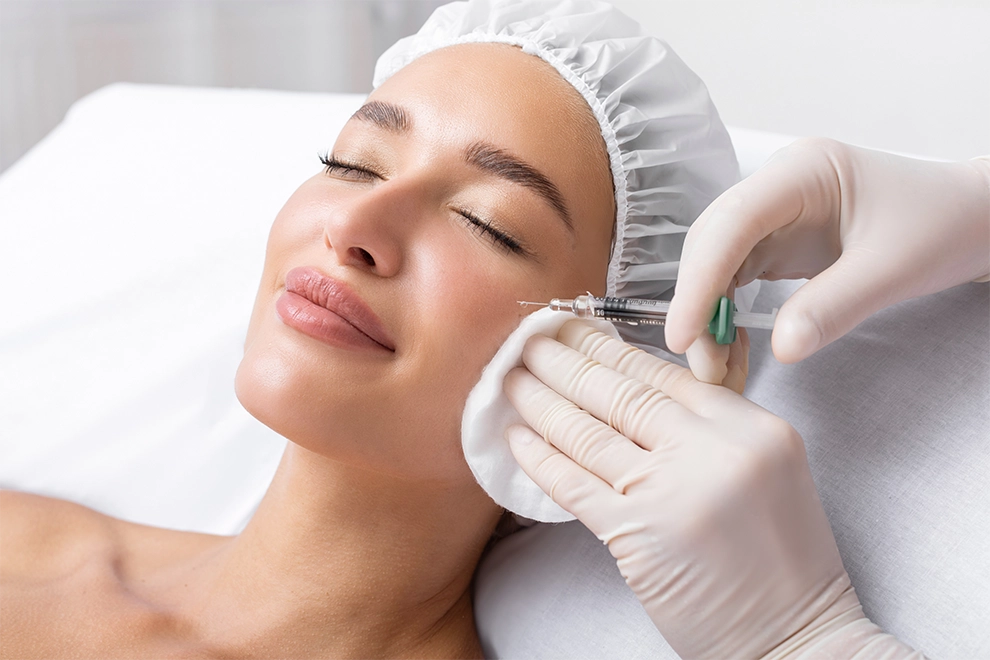
Our face is the most important mirror of our inner world and emotions. However, sometimes, even though we feel highly energetic, happy, and dynamic; when we look in the mirror or in photos, a tired, angry, or sad face may stare back at us. The biggest culprits behind this unwanted expression are the Nasolabial lines descending from the edges of the nose to the corners of the lips, and the Marionette (puppet) lines extending from the corners of the lips toward the chin.
These deep shadows, created by gravity on our face as time progresses, are among the most focused areas in aesthetic surgery and medical aesthetics. However, treating these lines requires a much more complex anatomical understanding than simply injecting a substance into them. As Op. Dr. Nebiye Tüfekçi Varer, my fundamental approach in our clinic is not to artificially inflate your face, but to repair the anatomical collapse causing this sad expression with a surgical vision, thereby restoring your “freshest and happiest” expression. In this guide, we discuss the intricacies of Nasolabial and Marionette fillers and how they create natural wonders when performed with surgical discipline.
Why Do Nasolabial and Marionette Lines Form?
Explaining the formation of these lines solely with the word “aging” falls short. Our face is a multi-layered, dynamic structure consisting of bone, muscle, fat pads, and skin. During youth, there are fat pads in the cheek area (midface) that hold tightly and keep the face lifted. However, over the years, the following three basic anatomical changes occur:
- Bone Resorption: Our facial skeleton loses volume over time and recedes.
- Sagging of Fat Pads: The skin, losing its elasticity due to collagen and elastin loss, succumbs to gravity, and the fat tissue in the cheeks sags downwards, piling up around the nose and mouth.
- Use of Mimics (Facial Expressions): The constant working of the muscles around the mouth while talking, smiling, and eating leads to the folding and “creasing” of the skin in these areas over time.
It is these folds, created around the mouth by tissues sliding down from the cheeks, that form the Nasolabial lines, while the sagging that pulls the lip corners down forms the Marionette (sadness) lines.
Treatment Approach Through the Eyes of a Surgeon: Why is Direct Filling Wrong?
One of the most common complaints my patients have regarding medical aesthetic applications is their faces becoming “heavy” or taking on a “simian” (monkey-like) appearance as a result of procedures they previously had done elsewhere. There is only one reason for this: filling the inside of the line at the edge of the nose with excessive amounts of filler without solving the root cause of the sagging tissue (volume loss in the midface).
With the vision of a Surgeon, our approach to nasolabial and marionette lines is a work of “engineering”:
- Holistic Evaluation: The lines are a “result,” while the “cause” is the sagging of the midface. Therefore, instead of directly filling the inside of the line, we generally aim to suspend the sagging tissue upwards by first providing support to the cheekbones and midface (with a lifting effect). When the cheeks are lifted, the nasolabial lines already open up significantly.
- Fine and Strategic Touches: After the midface is supported, if there is still depth in the lines, we then apply very fine-form, flexible (dynamic) Hyaluronic Acid (HA) fillers directly to the nasolabial and marionette lines.
- Lip Corner Support: Marionette lines pull the corners of the lips down. Even tiny supports applied solely to these corners instantly transform the “sad” expression on the face into a “neutral” or “slightly smiling” expression.
Frequently Asked Questions (FAQ) About Nasolabial and Marionette Filler
During the process of getting rid of these lines that catch your eye every time you look in the mirror, we answer all your concerns with medical reality:
- Will I feel pain or ache during the procedure? The application is extremely comfortable for our patients. Strong medical anesthetic creams are applied to the area before the procedure. Additionally, the top-tier FDA-approved fillers we use in our clinic contain local anesthesia (lidocaine) within their formulation. To protect the vascular network in this area and reduce the risk of bruising to zero, we use special instruments with non-pointed tips called “blunt cannulas.” This way, you do not experience tissue trauma.
- Will my face look natural after the procedure? Will I lose my facial expressions? The most fundamental principle of our clinic is “preserving naturalness.” Because dynamic filler techniques are used, the filler material stretches and moves along with your tissue when you make facial expressions (smiling, talking). Your face will never become frozen or look “done” from the outside. You will simply return to that fresh state from years ago, when your lines were much fainter.
- How long does the filler last? The area around the mouth is the most mobile part of our face where muscle activity is the most intense. Due to this dynamic structure, the longevity of hyaluronic acid fillers applied to the nasolabial and marionette areas varies on average between 9 to 18 months. Applications repeated at regular intervals significantly prolong the duration of the results.
- Will there be bruising or swelling after the procedure? When will I return to normal life? Thanks to the cannula technique, the risk of bruising is quite low. For the first 1-2 days, very slight edema (swelling) may be seen due to the filler retaining water, but this is not at a level that will attract outside attention. Immediately after the procedure, you can apply your makeup (after the recommended time has passed) and instantly return to your social life and work.
- Can we dissolve the filler if I don’t like the result of the procedure? Yes. Hyaluronic acid fillers are “reversible” procedures. Even though it is rare, if the result does not meet your expectations, the filler can be dissolved within seconds using an enzyme called “Hyaluronidase,” and your face will completely return to its original state.
Kartal Nasolabial and Marionette Filler Doctors and Prices
One of the topics frequently researched by patients consulting the Op. Dr. Nebiye Tüfekçi Varer clinic is nasolabial and marionette filler prices. Due to medical ethics rules and legal regulations, it is not possible for us to share a standard, public price list online. This is because the anatomical needs of every face are completely different from one another. The main criteria that transparently shape our pricing policy are as follows:
- Premium Filler Brands: The constant movement of the application area (around the mouth) requires the filler injected here to be highly flexible and of superior quality. In our clinic, only clinically tested, reliability-proven, world-class, top-tier FDA-approved brands (such as Juvederm, Teosyal, etc.) are used. This premium quality of the material is the primary factor determining the cost.
- Personal Anatomical Need (Amount of Syringes): The amount of filler (ml) to be used varies depending on the depth of our patient’s lines and the degree of sagging in their face. While 1 syringe (ml) of filler may be sufficient for some patients, 2 or more syringes may be required for patients whose midface also needs support. This directly affects the pricing.
- The Surgeon’s Application Experience: The nasolabial area is a critical anatomical field where very important vessels (like the facial artery) passing through the face are located. The intervention to be made in this area is not an ordinary injection; it requires serious risk management and surgical vision. The safety of the procedure, its aesthetic success, and the correct intervention in tissue planes are directly proportional to the experience of the surgeon performing the procedure.
If you want to erase the sad and tired expression on your face and reverse the traces of the years with surgical precision and in the most natural way, we would be happy to welcome you to the Op. Dr. Nebiye Tüfekçi Varer clinic. You can book a free preliminary consultation appointment to have an anatomical analysis of your face and to plan the “tailor-made” treatment that will suit you best. Entrust your naturalness and expression to expert hands.