
In facial aesthetics, there is a universal symbol of youth, dynamism, and attractiveness: high, prominent cheekbones that reflect light perfectly. During our younger years, the face resembles an “inverted triangle” (V-shape), with the widest point at the cheekbones and the point at the chin. However, over time, due to the effects of gravity, loss of bone density, and the downward migration of mid-face fat pads, this triangle flips. This leads to sagging, a tired look, and a sad expression.
Today, the most powerful key to reversing this structural collapse and lifting the tissues without the need for a surgical facelift is Cheek (Mid-Face) Filler. As an Operator Doctor, my approach in our clinic is not simply to “inflate” the cheeks, but to rebuild the lost skeletal support of the face using deep anatomical knowledge. Our goal is not to turn you into someone else, but to repair the “load-bearing columns” of your face, restoring that fresh and bright look you had years ago.
What is Cheek Filler and How Does It Affect the Skin?
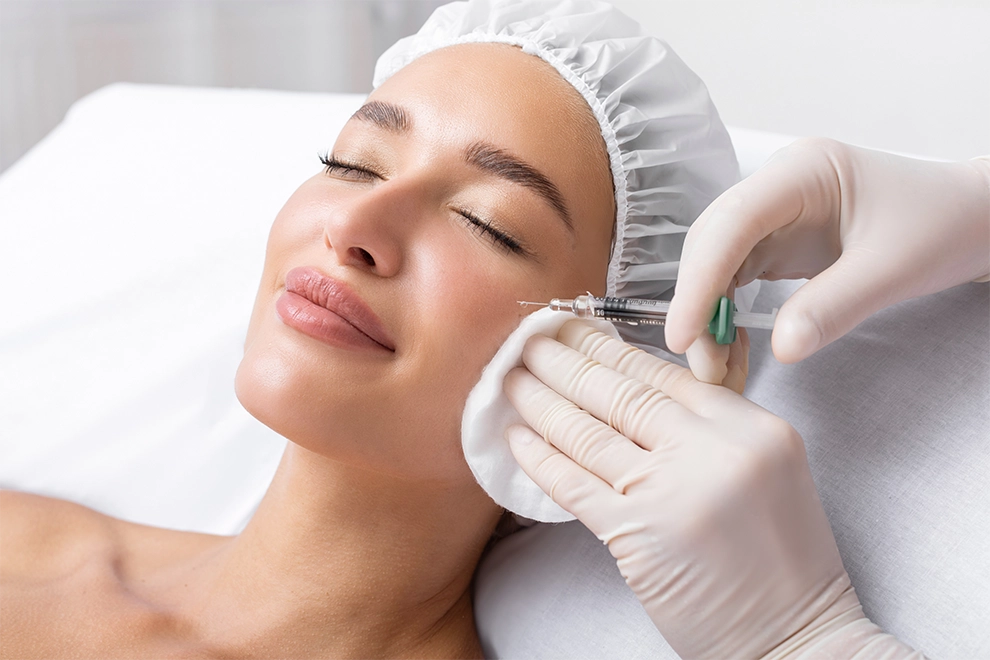
Cheek filler is the process of injecting specially formulated gels based on Hyaluronic Acid (HA)—a structural building block naturally found in our bodies—into the cheekbone line (zygomatic region).
The fillers applied to the mid-face region are structurally different from lip or under-eye fillers. Since this area acts as the supporting column of the face, the hyaluronic acid gels used here must have a much higher “lifting capacity” (G-Prime value), being firmer and strong enough to push the tissue upward. These bio-compatible gels placed under the skin mimic lost bone tissue to provide skeletal support while also improving skin quality by providing intense hydration.
Cheek Filler from a Surgical Perspective: The “Lifting” Effect
The greatest aesthetic disasters in medical aesthetics occur from uninformed injections performed without knowledge of the face’s anatomical layers. The “pillow face” look—with small eyes and over-swollen cheeks—seen on television or social media is a direct result of these incorrect techniques.
The difference in the cheek filler protocol at Op. Dr. Nebiye Tüfekci’s clinic lies in “Surgical Vision”:
-
Deep Plane Injection: Cheek filler should not be applied just under the skin, but directly onto the bone membrane (supraperiosteal) or into deep fat compartments. When the filler is placed deep, it doesn’t look “puffy” from the outside; instead, it lifts the tissue from within like a tent pole.
-
Holistic Domino Effect: When volume is added to the correct points of the cheekbones, more than just the cheeks become prominent. As the sagging tissue is lifted, your Nasolabial folds (lines from the nose to the mouth) soften, your Tear troughs (under-eye hollows) are supported, and the sagging at the Jawline is tightened. A correct intervention in a single area rejuvenates the entire face.
-
Golden Ratio and Tailor-Made Planning: No procedure is performed without analyzing your skeletal structure, nose-to-chin angle, and temple width. A “tailor-made” restoration is provided by determining the most suitable angle and amount for you.
Frequently Asked Questions (FAQ) About Cheek Filler
We answer all your questions regarding this critical area that defines your facial character with transparency and medical facts:
1. Will I feel pain or discomfort during the procedure? The application is extremely comfortable. Strong medical anesthetic creams are applied before the procedure. Additionally, new-generation, FDA-approved hyaluronic acid fillers contain local anesthesia (lidocaine). Since we mostly use flexible, blunt-tipped cannulas instead of needles, which do not cut the tissue, you won’t feel pain during the process.
2. Will it look “puffy and artificial” (Pillow Face)? This is the biggest fear of my patients, and they are right to be concerned. However, when cheek filler is applied according to surgical anatomy, directly onto the bone and in the correct dosage, it never creates an artificial swelling. Your expression will not freeze, and your eyes will not look smaller. Instead, you achieve a very elegant look as if your face has slimmed down, your cheekbones catch the light beautifully, and your face is lifted.
3. How long do the results last? Because the fillers used in the cheek area are high-density (firm) and injected into the deep plane, they last much longer than in other areas of the face. Depending on your metabolism, they generally last between 12 to 24 months. When the procedure is repeated regularly, this duration extends significantly.
4. What is the recovery process like? Since we work with the cannula technique, the risk of bruising and significant tissue trauma is minimal. The procedure takes about 15-20 minutes, and you can return to your social life and work immediately. There may be slight tenderness at the entry points the next day, which will subside quickly.
5. Does cheek filler make the face look thinner? Yes, when done correctly, it creates this illusion. When sagging tissues accumulate at the jawline, the face squares off and looks wider. When volume is given to the cheekbones and the tissue is lifted, the face regains its “V” form, making the face appear slimmer and more elegant.
6. Is it reversible if I don’t like the result? As with all our hyaluronic acid-based fillers, we have a complete safety net for cheek fillers. If you are unsatisfied for any reason, the filler can be safely and completely dissolved within 24 hours using a special enzyme called “Hyaluronidase.”
Cheek Filler Doctors and Prices in Kartal
One of the most researched details for patients visiting Op. Dr. Nebiye Tüfekci’s clinic is the cost of the procedure. Due to Ministry of Health guidelines and medical ethical rules, it is not legally possible to publish a specific price list on our website. However, our pricing policy is completely transparent. The main factors determining the cost of cheek filler are:
-
Brand and Premium Quality of the Filler: The “lifting power” and tissue compatibility of the filler used for the mid-face must be very high. We only use premium, FDA-approved brands (such as Juvederm Voluma, Teosyal Ultra Deep) whose reliability is confirmed by clinical tests worldwide. Risking facial anatomy with cheap fillers of unknown origin is never compatible with our surgical principles.
-
Amount Used (Number of MLs): The degree of volume loss in the cheekbone differs for every patient. While 1-2 ml might be enough for a slight light reflection in some patients, 3-4 ml may be needed to create a lifting effect in older patients or those with significant weight loss. Pricing is calculated based on the number of syringes (ml) used.
-
The Surgeon’s Anatomical Mastery: The cheek area is the main bridge of the face. An intervention here is not a simple aesthetic procedure; it is a medical art requiring serious anatomical knowledge and surgical vision. The surgical experience of the physician is the fundamental value that guarantees safety and a flawless result.
You are invited to the clinic of Op. Dr. Nebiye Tüfekci to erase the tired look on your face, defy gravity, and achieve that bright, dynamic appearance that suits you best. You can contact us to create a “tailor-made” treatment plan and book your consultation. Remember, aesthetics is not a luxury; it is your right to live as the best version of yourself.