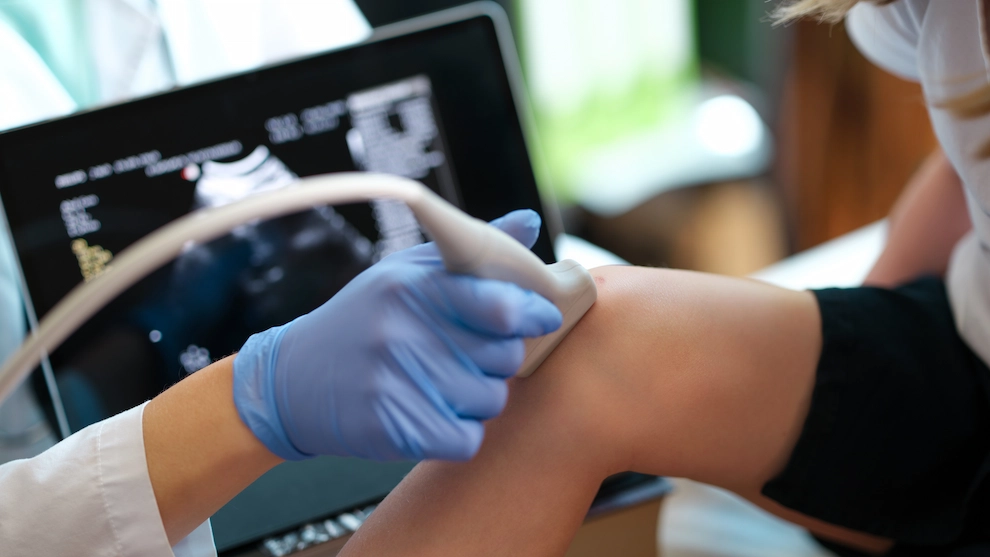
Venous Evaluation with Color Doppler Ultrasound
It is the gold standard for the early diagnosis of venous…
Get Information

This is a modern and minimally invasive treatment approach that aims to restore blood flow by reopening narrowings (stenoses) that develop in superficial veins using intravascular techniques.
Procedure Duration :
20 - 40 min

Superficial vein stenosis refers to the narrowing of a vein’s diameter due to structural changes in the vessel wall, previous interventions, post-thrombotic sequelae, or the progression of chronic venous disease. This condition may lead to symptoms such as leg pain and a feeling of fullness, swelling and fatigue, progression of varicose veins, and insufficient clinical improvement after treatment.
Endovascular treatment involves managing superficial vein stenosis by entering the vessel under ultrasound and/or fluoroscopic guidance and performing balloon angioplasty, along with supportive techniques when necessary. The goal is to open the narrowed segment and improve venous return.
Before the procedure, areas of stenosis are thoroughly evaluated with Color Doppler Ultrasonography. The treatment is performed under local anesthesia using thin catheters inserted into the vein. The narrowed segment is dilated with a balloon to restore proper venous flow. The procedure usually takes between 20 and 40 minutes.
For detailed information about the endovascular treatment of superficial vein stenosis and to schedule an appointment, you may contact us.
The patient is mobilized shortly after the procedure. The use of compression stockings may be recommended when necessary. Clinical follow-up and control evaluations are performed with Doppler ultrasound.
Endovascular treatment of superficial vein stenosis is not suitable for every patient. The decision for treatment is determined based on a detailed physician examination, Doppler ultrasound findings, and the patient’s clinical symptoms.