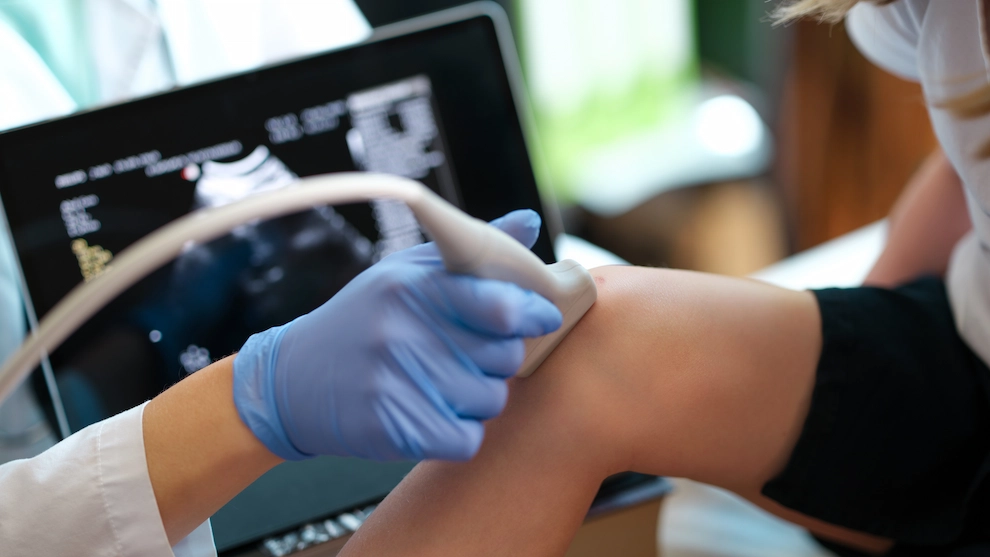
Venous Evaluation with Color Doppler Ultrasound
It is the gold standard for the early diagnosis of venous…
Get Information


Sclerotherapy is a widely used treatment for varicose veins, in which a sclerosant solution is injected into the vein to close it.
Procedure Duration :
10 - 20 min

This procedure is painless and minimally invasive. Treated veins are gradually absorbed, usually without leaving scars. Sclerotherapy may require several sessions, each lasting approximately 10–20 minutes.
Sclerotherapy is particularly effective for capillaries and small varicose veins. When the sclerosant is injected, it damages the vein walls, causing the veins to gradually disappear. This process can prevent the recurrence of varicose veins and provide a long-term solution. Patients can resume daily activities immediately after the procedure.
Sclerotherapy is an excellent option for patients with cosmetic concerns or those who prefer to avoid surgery. The treatment is quick, safe, and recovery time is short.
For superficial varicose veins, sclerotherapy can be safely applied to suitable patients after evaluating any underlying venous disease. For detailed information and appointment scheduling, please contact us.
To achieve the best results from sclerotherapy and reduce side effects, some preparations are necessary before the procedure. About a week before the session, unless medically required, it is recommended to stop anticoagulants, painkillers other than aspirin and paracetamol, as well as supplements such as vitamin E and fish oil. In necessary cases, these medications can be used under the guidance of a doctor. Smoking and alcohol should be avoided for two days before and two days after the procedure. Iron medications may increase the risk of dark spots on the skin, so it is advised to pause them during treatment. On the day of the procedure, creams or lotions should not be applied to the treatment area; a shower should be taken, and comfortable clothing should be worn. A medium-pressure (23–32 mmHg) compression stocking should be available after the procedure.

After the procedure, brisk walking should be done for at least 30 minutes, and regular walking should continue for the following 15 days. Long periods of inactivity and heavy exercise should be avoided. Elastic bandages or compression stockings should not be removed for the first 24 hours, and afterward, they should be used regularly for the period recommended by the doctor.
Proper use of compression stockings and at least 20 minutes of daily brisk walking are fundamental to the treatment. Redness, bruising, swelling, and tenderness may occur in the treated areas, but these are usually temporary. Cold compresses can be applied if pain increases; in case of severe pain or significant swelling, the doctor should be consulted.
No shower should be taken in the first 24 hours; afterward, lukewarm water is recommended. During treatment, hot baths, saunas, and hair removal should be avoided.
Color changes and bruising may occur in the treated areas; these symptoms decrease over time as the body absorbs the veins. Recovery time varies from person to person, but it may take several months. Veins closed with sclerotherapy are permanently removed; however, since varicose vein disease is chronic, new veins may form. Therefore, regular medical follow-up is important.
In sclerotherapy, the diameter, location, and extent of the varicose or spider veins are evaluated. The special medication injected into the vein allows the vein to be closed in a controlled manner. The treatment plan is tailored to the individual, taking into account vein structure, the severity of complaints, and the patient’s overall condition. Multiple sessions may be applied if necessary.
Sclerotherapy is typically used for vein problems such as:
Mild redness, bruising, or tenderness may occur after the procedure and are generally temporary. The use of compression stockings may be recommended for the duration advised by the doctor. Patients can return to their daily activities on the same day. The treatment process is monitored through follow-up examinations, and subsequent sessions are scheduled as needed.
Suitability is determined after a medical examination and ultrasound evaluation.