As a reality of a fast-paced life, we usually attribute the signals our body gives us at the end of the day to simple fatigue. When you take off your shoes in the evening, you might notice that the elastic of your socks leaves deep indentations, your ankles have thickened, and an indescribable feeling of heaviness has settled in your legs. Most people brush this off by saying, “I was on my feet all day, it’s normal,” and hope it will pass with some rest. However, if this swelling goes down in the morning only to reappear toward the evening, disrupting your life in a continuous cycle, your body might be signaling a deeper issue: a malfunction in your circulatory system.
Persistent ankle swelling that worsens in the evening—even when there are no visible purple or green veins on the surface—is one of the most prominent indicators of deep venous insufficiency, commonly known among the public as “Internal Varicose Veins.”
In this comprehensive guide, we discuss transparently why ankle swelling occurs, the anatomical dimensions of the internal varicose vein risk, how you can alleviate these complaints at home, and the modern, non-surgical varicose vein treatment methods that will restore your long-term health in a clinical environment.
What is an Internal Varicose Vein (Deep Venous Insufficiency)? Why Does Swelling Occur?
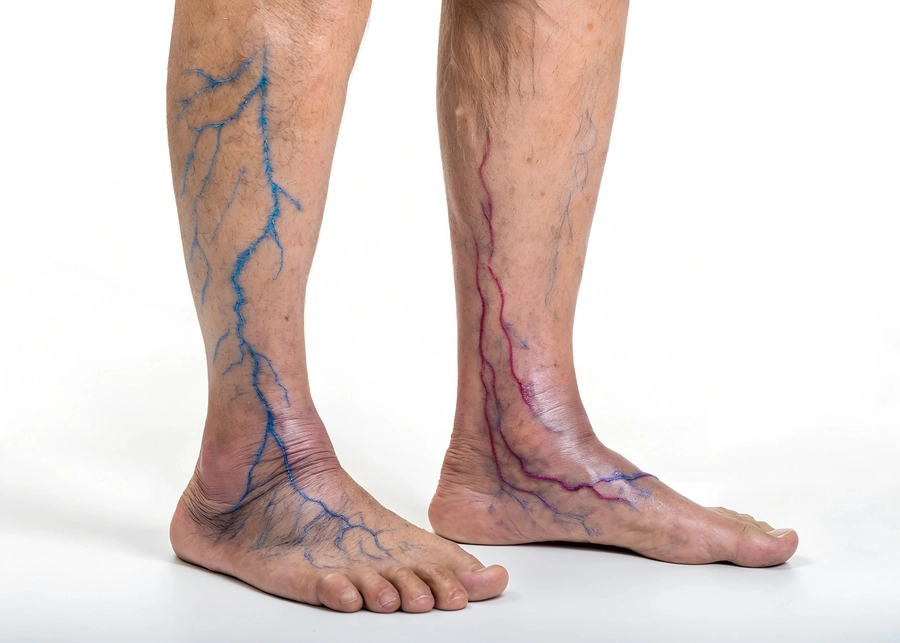
When varicose veins are mentioned, most people immediately think of prominent, twisted, blue or green bulging veins on the skin surface. However, varicose vein disease does not always progress in a visible manner. In our legs, passing far beneath our skin and between the muscles, lies the “deep vein” network, which carries the vast majority of the blood back to the heart.
For blood to fight gravity and travel upward toward the heart, these veins contain tiny, one-way valves. When these valves lose their elasticity and become damaged due to factors like a sedentary lifestyle, genetic predisposition, excess weight, or prolonged standing, blood cannot be fully pumped upward. Instead, it leaks backward and begins to pool in the lower parts of the legs, particularly around the ankles.
It is precisely this pressure that is the root cause of that stubborn swelling (edema) in your ankles. The high hydrostatic pressure created by the pooling blood inside the vein causes fluid to leak out through the vessel walls. This fluid, seeping into the surrounding tissues (under the skin), accumulates under the effect of gravity around the ankles and lower calves, creating a visible state of edema. If you do not see any veins on the surface of your skin but your ankles swell like a drum, this situation should strongly raise the suspicion of an “Internal Varicose Vein.”
How to Tell If Ankle Swelling is Caused by Varicose Veins?
Ankle swelling can also result from different health problems such as heart failure, kidney diseases, orthopedic traumas, or lymphedema. However, there are some very characteristic symptoms that help determine whether the swelling originates from vascular insufficiency (varicose veins):
Characteristics of Varicose-Related Swelling
| Feature | How It Differs from Other Swelling |
| Timing | When you wake up in the morning, your legs are thin and there is no swelling. As the day progresses, the swelling reaches its maximum level, particularly in the evening hours. |
| Accompanying Complaints | The swelling is generally accompanied by fullness in the legs, a lead-like feeling of heaviness, burning, and cramps that wake you up from sleep at night. |
| Skin Changes | In advanced cases, the skin around the ankle begins to dry, itch (venous eczema), and turn a brown/rust color. |
| Relief Conditions | Resting your legs by elevating them above heart level and applying cold water alleviates the swelling and pain very rapidly. |
If you are experiencing one or more of these symptoms, it is of vital importance to consult a Cardiovascular Surgery specialist without losing time to learn the root cause of the problem and start the treatment from the right direction.
What is Good for Ankle Swelling at Home? First-Aid Style Solutions
Varicose veins and venous valve impairments are not conditions that can be treated with topically applied creams or herbal cures. Valve impairment is a structural and anatomical damage. However, until your permanent treatment is planned, you can follow these steps to increase your daily quality of life and relieve that pressure:
- Elevation (Raising the Legs): When you come home at the end of the day, lie down and place a few pillows under your feet so they are elevated above your heart level. With the help of gravity, the pooled blood will flow back toward the heart, the fluid in your ankles will be reabsorbed from the tissues, and the swelling will rapidly go down.
- Cold Water Shock Application: Hot weather, Turkish baths, saunas, and hot water bottles widen the veins even more, increasing blood pooling and swelling. Cold water applied to your legs from the bottom upward at the end of a shower constricts the blood vessels, lowering the pressure and providing instant relief.
- Regular Walking: The calf muscles work like our legs’ second heart. As you take steps, these contracting muscles squeeze the veins and pump the blood upward. If you work at a desk, walking for a few minutes inside the office every hour largely prevents edema formation.
Permanent Solutions in the Treatment of Ankle Swelling and Internal Varicose Veins
You do not have to accept the edema in your ankles and the internal varicose vein problem as your destiny. Developing medical technologies have completely left behind the fears created by the word “surgery.” Today, it is extremely comfortable to reset the pressure inside the vein and re-establish healthy blood flow with the non-surgical varicose vein treatments we perform. The primary methods we offer for this problem in our clinic are as follows:
1. Correct Diagnosis: Color Doppler Ultrasonography (Vein Mapping)
No treatment is started blindly. First, a milimetric X-ray of your leg veins is taken using Color Doppler Ultrasound performed in our clinic. It identifies which vein has a leak, how severely the valves are damaged, and exactly where the primary source creating the swelling is located. The entire treatment plan is drawn specifically for the individual based on this mapping.
2. Laser Varicose Vein Treatment (EVLA)
This is the gold standard we use particularly for medium and large-scale main vein insufficiencies that cause internal varicose vein complaints and pressure in the ankle. Without making any incisions, the inside of the problematic vein is entered through just a single needle hole under ultrasound guidance. By delivering laser energy to the inner wall of the vein, the vessel is sealed (closed) from within. The blood immediately leaves that damaged vein and redirects to surrounding healthy veins. It requires no general anesthesia, needs no stitches, and the patient returns to their daily routine by walking. The heavy edema in the ankle disappears completely within days as the pressure drops.
3. Varicose Vein Treatment with Radiofrequency (RF)
This is another high-tech cellular repair procedure that operates on exactly the same philosophy as laser treatment but utilizes radio waves instead of heat energy. Entering through a needle hole, the vein is constricted from the inside with the help of a catheter. Post-procedure bruising and sensitivity are at a minimum level. The fullness in the legs and the ankle swelling begin to regress immediately after the treatment.
4. Foam Treatment (Sclerotherapy)
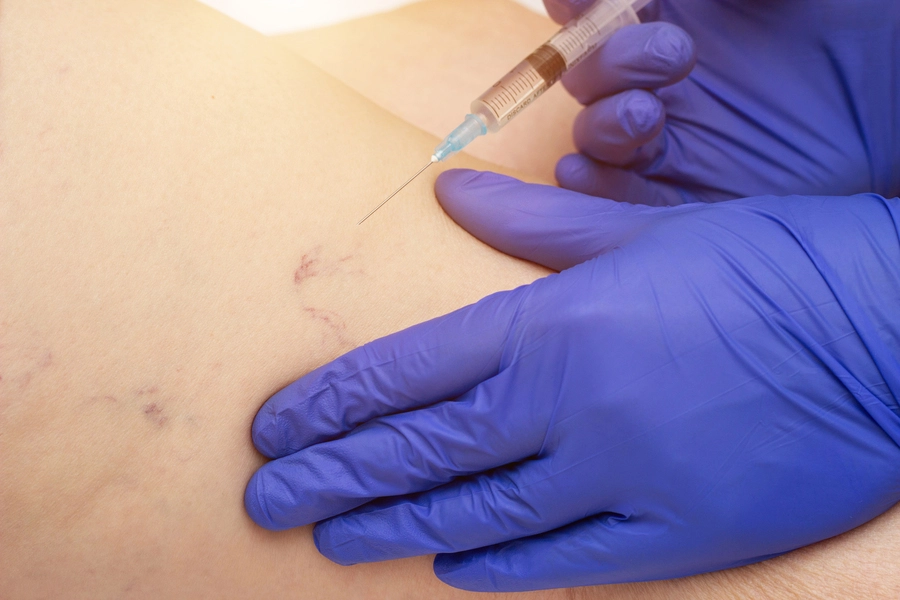
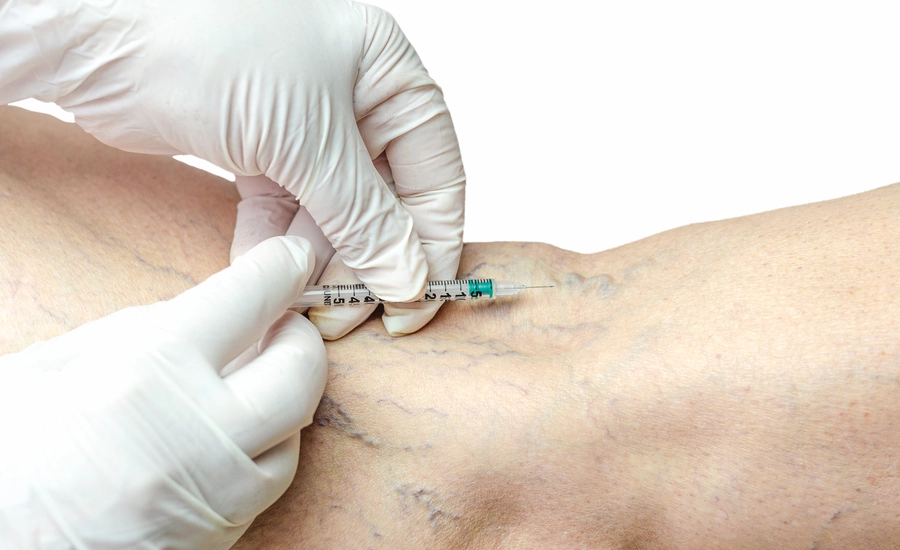
After the pressure in the main veins is resolved with EVLA or RF, if there are remaining medium-sized varicose veins or branches on the skin surface causing complaints, foam treatment comes into play. It involves mixing a special medication that heals the vein wall with air to bring it into a foam form, which is then injected into the vein using very fine needles. The medication ensures that the problematic vein closes, breaks down, and is absorbed and eliminated by the body.
Healthy and Light Steps in Kartal with Op. Dr. Nebiye Tüfekci
Evaluating the swelling in your ankles as simple fatigue and living with this weight for years can pave the way for the disease to progress into much more challenging stages, such as venous ulcers (varicose sores). The diagnosis and treatment of circulatory system diseases require advanced anatomical knowledge, mastery of Doppler ultrasound, and an experienced surgical vision that shows maximum respect to vascular tissue.
Blending her deep experience in vascular health and microsurgery throughout her professional career with the transparent communication she establishes with her patients, Cardiovascular Surgery Specialist Op. Dr. Nebiye Tüfekci meticulously applies the most reliable, non-surgical treatment protocols to patients applying with persistent leg swelling and internal varicose vein complaints. Our goal is to save you from those painful swellings you suffer every evening and bring you to healthy days where you will feel the lightness of your own legs once again.
We carry out all diagnosis, Doppler ultrasound mapping, and comfortable treatment processes of our esteemed patients in our well-equipped clinic located inside Bumerang Kartal Rezidans, which offers a modern and peaceful environment where hygiene standards are maintained at the highest level. Situated in one of the most distinguished and easily accessible locations on the Anatolian Side of Istanbul, our clinic provides great ease of transportation without experiencing traffic chaos for our guests coming from neighboring districts such as Maltepe, Pendik, Tuzla, and Ataşehir, thanks to its strong direct connections to the E-5 highway, metro stations, and the coastal road, primarily serving the Kartal region.
To stop postponing the signals your body gives you, to learn the root cause of those stubborn swellings in your ankles professionally, and to meet our comfortable non-surgical treatments, you can contact our clinic at Bumerang Kartal Rezidans to schedule your preliminary examination appointment. We are by your side with experienced hands in that new life where you will take feather-light, pain-free, and free steps.