Today, for our patients battling chronic kidney failure and undergoing hemodialysis treatment, the most vital issue is establishing a reliable “vascular access” that will allow the blood to be drawn from the body, cleaned, and returned safely. Most of the time, the primary goal is to open a natural AV Fistula or an artificial vein (Graft) created from the patient’s own veins. However, in some cases, the patient’s vascular structure may not be suitable for these procedures, the opened fistulas may become blocked one after another, or it may take weeks of waiting for a newly opened fistula to mature (develop).
In such moments of crisis, or for patients whose vascular reserve is completely depleted, one of the most valuable solutions in modern medicine comes into play, ensuring that dialysis treatment continues safely and highly efficiently without any interruption: The Permanent Dialysis Catheter, commonly known in the medical field as Permcath. Remaining trouble-free for years, this medical technology truly becomes a lifeline for dialysis patients.
From the perspective of a Cardiovascular Surgeon, our fundamental priority is to eliminate the unknowns in our patients’ treatment journeys and to explain surgical procedures in the most transparent way possible. In this comprehensive guide, we cover every detail of the permanent dialysis catheter application—a long-term and reliable safe harbor for our patients during the dialysis process—along with the most frequently asked questions.
What is a Permanent Dialysis Catheter (Permcath)?
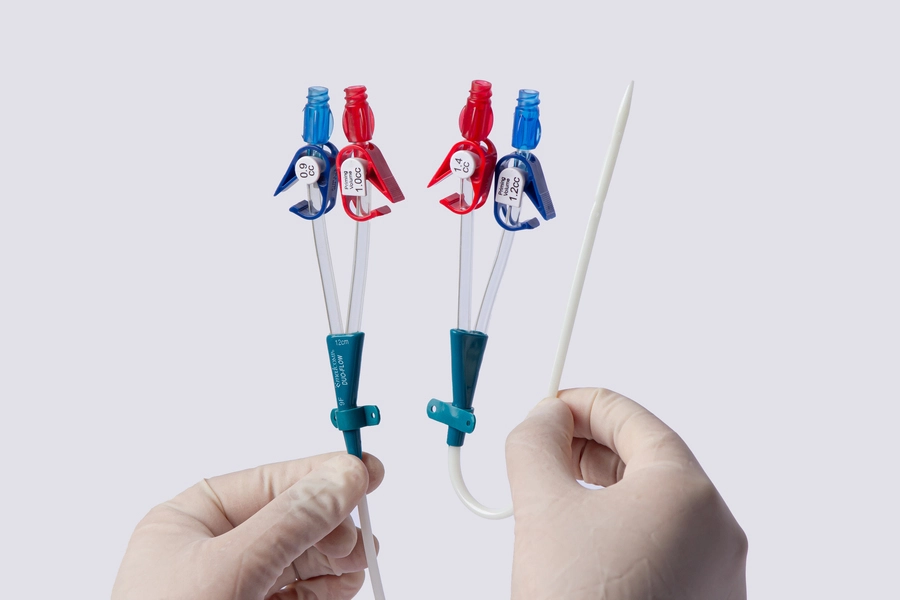
A permanent dialysis catheter is an advanced medical tube made of extremely soft, flexible, and bendable silicone or polyurethane-based special materials that are 100% biocompatible with human tissue. Inside this tube, there are two separate pathways (lumens) that facilitate the dialysis cycle. While one draws the toxin-laden blood to the machine, the other simultaneously pumps the cleansed blood back into the body.
The most crucial detail that distinguishes this system from “temporary” catheters and earns it the “permanent” title is a special sponge-like ring called a Dacron cuff, located on the part of the catheter that remains under the skin. A few weeks after placement, this cuff completely integrates and fuses with the patient’s own subcutaneous tissue. This fusion prevents the catheter from dislodging and creates an impenetrable, natural shield (barrier) that stops external bacteria from reaching the bloodstream.
Why is a Permanent Catheter Preferred? (What is its Purpose?)
Permanent dialysis catheters are developed to provide safe, long-term blood flow. They are preferred as a primary or mandatory option by physicians in the following critical medical situations:
- While Waiting for Fistula Maturation: It acts as a reliable bridge during the months-long waiting period required for a newly opened AV Fistula or an implanted graft to become ready for use.
- In Patients with Depleted Vascular Access: It is the only and safest lifeline for patients whose suitable superficial veins in their arms and legs have been exhausted in past operations, making it impossible to open a new fistula or graft.
- In Patients with Heart Failure: Because fistula procedures increase the rate of blood returning to the heart, they can tire the heart in patients with advanced heart failure. To avoid placing an extra burden on the heart, a permanent catheter is directly preferred.
- In Patients with Needle Phobia: For patients who cannot tolerate being pricked with thick needles during every dialysis session and whose veins are very thin and sensitive, it offers a needle-free, painless dialysis entry.
How is a Permanent Dialysis Catheter Placed? The Surgical Process
The word “permanent” might give our patients the impression of a heavy surgical operation. However, Permcath placement is a delicate microsurgical procedure performed under local anesthesia, where the patient is completely awake, feels no pain, and requires high technology.
- Mapping with Ultrasound and Fluoroscopy: Before the procedure, your physician locates the appropriate large vein using ultrasound. The operation is always performed in special surgical rooms equipped with an angiography device (fluoroscopy/X-ray) to instantly view the correct positioning of the catheter at the entrance to the heart.
- Anesthesia and Preparation: Both the neck area where the vein will be accessed and the chest area where the catheter will pass under the skin are thoroughly numbed with local anesthetic drugs. The patient feels no pain from incisions or tunneling. Mild sedation (a relaxant) may sometimes be administered to keep the patient calm.
- Opening the Subcutaneous Tunnel: The greatest feature of permanent catheters is that they do not enter the vein directly from the outside. The catheter is inserted under the skin through a small hole made in the chest area and is advanced through a subcutaneous “tunnel” of approximately 10-15 cm to reach the main vein in the neck.
- Placement in the Vein: The tip of the catheter, advanced from under the skin, is inserted into the neck vein and positioned directly in the upper part of the right atrium of the heart. It is positioned so that the Dacron cuff remains under the skin, and the external portion is secured with one or two small stitches. The procedure takes an average of 30-45 minutes.
Where on the Body is the Permanent Catheter Placed?
A permanent dialysis catheter is placed directly into the large main veins leading to the heart so that it can handle a high and uninterrupted blood flow.
- First Choice (Right Jugular Vein): The right neck vein is always the first and safest choice for surgeons as it anatomically provides the straightest and widest route to the heart.
- Alternative Areas: If there is a blockage in the right neck vein, the left neck vein, the area under the collarbone (subclavian vein), or in very rare cases, the groin (femoral vein) may be preferred respectively.
- Exit Point: Even though the catheter is placed into the neck vein, thanks to the “tunnel” technique, the exposed tubes do not hang from your neck but emerge from your right chest wall, where you can comfortably hide them under your clothes. This provides a tremendous advantage in terms of aesthetics and comfort.
Who is a Suitable Candidate?
All chronic kidney failure patients who have no veins left for a fistula to be created surgically, patients who carry surgical risks due to advanced age and additional chronic diseases (severe heart failure, severe atherosclerosis, etc.), and children and pediatric dialysis patients are the primary candidates for permanent catheter application. After the anatomy and infection status are evaluated by a physician, it can be safely applied to almost any patient.
When Can It Be Used and How Long Does It Last?
Unlike temporary solutions, a permanent catheter is ready for dialysis use on the very same day, immediately after the operation is finished. You do not have to wait weeks for it to mature like you do with fistulas.
“How long” a permanent catheter will last depends entirely on how strictly the patient adheres to hygiene rules and the quality of the dressings at the dialysis center. Thanks to the tissue integration of the Dacron cuff, the risk of infection is exceptionally low. A well-maintained Permcath, protected from water contact and regularly flushed with lock solutions (heparin), can be used flawlessly for months, or even years (up to 5-10 years).
Frequently Asked Questions (FAQ)
In our clinical consultations, we transparently address the details our patients rightfully worry about the most:
1. Can I take a bath with a permanent dialysis catheter? It is extremely important that the catheter’s exit point on the chest does not come into contact with tap water to prevent the risk of infection. However, this does not mean you can never bathe. You can safely take a warm shower by using special, waterproof transparent tapes (catheter covers) sold in pharmacies that completely seal the catheter area. After bathing, you must ensure that your catheter area remains dry. If there is any moisture, you should have your sterile dressing renewed at your dialysis center.
2. Will the catheter restrict my neck movements after the procedure? No, it will not. Catheters are made of flexible silicone that adapts to human body temperature and are routed through the chest area via the tunneling technique. After a brief adjustment period, you will experience absolutely no restrictions in turning your neck side to side, sleeping, or performing your daily physical activities.
3. Can I have blood drawn or receive an IV drip through the catheter? This is strictly forbidden. Your permanent dialysis catheter is your lifeline. Except for severe emergencies, it must never be used for any purpose other than the dialysis procedure itself (such as drawing blood, administering antibiotics, or giving painkiller IVs). The caps of the catheter must only be opened and closed by expert dialysis nurses under strict sterile conditions.
Safe Vascular Access Solutions in Kartal with Op. Dr. Nebiye Tüfekci
In your long-term dialysis journey, the quality of your vascular access directly determines your quality of life and treatment comfort. The placement of a permanent dialysis catheter (Permcath) is not an ordinary needle injection; it is a highly specific medical procedure that requires advanced knowledge of vascular anatomy, meticulous precision, and high-level surgical experience, performed under angiography and ultrasound guidance.
Throughout her professional career, Cardiovascular Surgery Specialist Op. Dr. Nebiye Tüfekci has stood out for the trust-based, transparent communication she establishes with her patients and her microsurgical successes in complex vascular access cases. In moments when fistulas and grafts fail and hope dwindles, she meticulously provides her patients with the most long-lasting, reliable, and comfortable catheter solutions. Our goal is to erase our patients’ fears and anxieties, building a sturdy bridge to life that will serve them for years to come.
We carry out all clinical examinations, vascular analyses, and surgical planning processes for our valued patients with immense dedication in our modern clinic located within Bumerang Kartal Rezidans, where top-tier hygiene and patient comfort are our highest priorities. As one of the most distinguished and central healthcare locations on the Anatolian Side of Istanbul, our clinic completely eliminates transportation stress. Thanks to the extensive transit network—including the E-5 highway, metro stations, and the coastal road—our clinic is easily accessible not only for the Kartal region but also for guests arriving from surrounding districts such as Maltepe, Pendik, Tuzla, and Ataşehir.
If your dialysis sessions have turned into a nightmare due to fistula problems, or if you are in need of a new, reliable, and long-lasting permanent dialysis catheter, you can contact our clinic at Bumerang Kartal Rezidans for the correct surgical techniques and transparent information. We are always by your side with experienced hands, helping you confidently step into healthy, painless, uninterrupted, and freely breathing dialysis days.