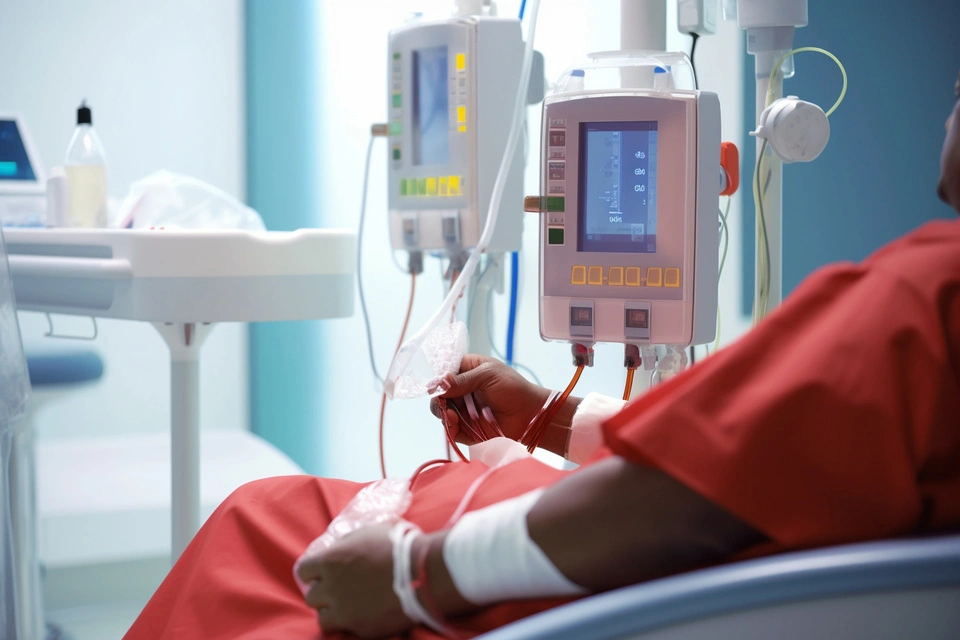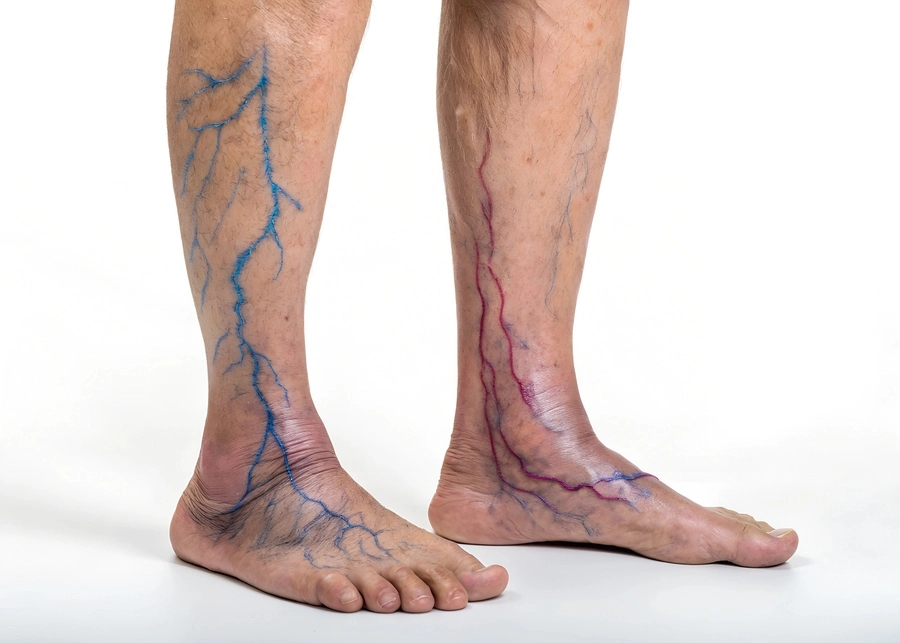
Nowadays, time is of the essence for our patients who suddenly develop kidney failure or who have chronic kidney failure but have not yet had a permanent vascular access (AV Fistula or Graft) prepared. The dialysis machine, which must quickly take over the kidneys’ blood-filtering task, needs to access the patient’s blood safely and with a high flow rate. However, when dialysis must be started emergently, we do not have weeks or months to wait for the vessels in the arm to be joined via microsurgery and mature.
In such moments, the fastest and life-saving medical solution that secures our patients’ lives and allows dialysis treatment to begin within minutes is the temporary dialysis catheter application. Acting almost like a “lifesaver” in emergencies, this method ensures that the dialysis process continues uninterrupted until the patient’s permanent vascular access surgery is planned and that vessel becomes ready for use. As a cardiovascular surgeon, one of the most frequent situations I encounter is the justified panic and fear experienced by patients who have suddenly been decided to undergo dialysis. In this comprehensive guide, in order to eliminate all the question marks in the minds of our patients who need to take an urgent step into the dialysis process; we cover what a temporary dialysis catheter is, where it is inserted in our body, the surgical process, and what to pay attention to in daily life with medical simplicity.
What is a Temporary Dialysis Catheter, What Does it Do?
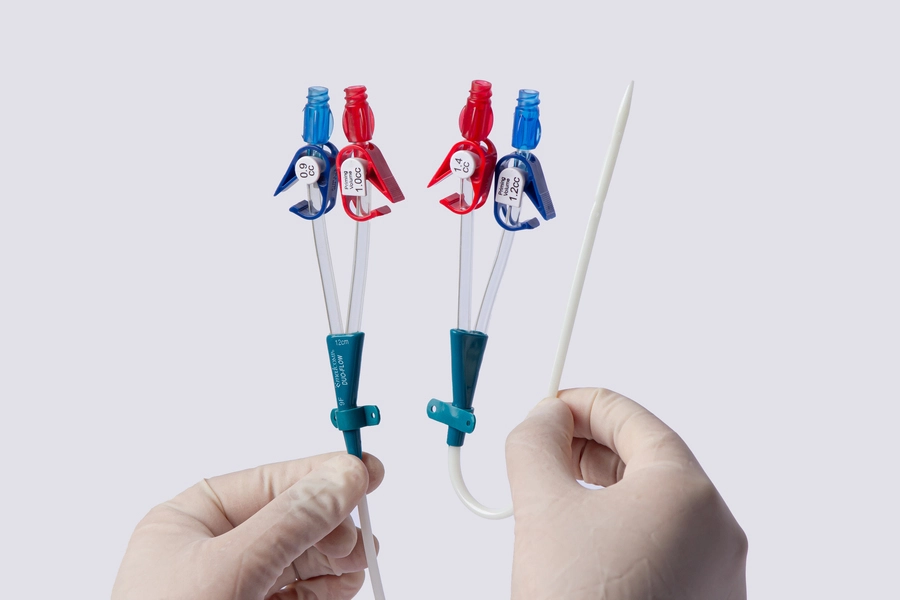
A temporary dialysis catheter is a thin medical tube made of soft, flexible, and bendable polyurethane or silicone material that is compatible with human tissue. Inside this tube, just like a double-lane highway, there are two separate channels (lumens). During a dialysis session, while one of these channels draws the toxin-accumulated dirty blood from the body to the dialysis machine; the other channel returns the cleaned blood from the machine back to the body simultaneously and at a high speed.
This system, as the name suggests, is designed as a “temporary” solution. Its main purpose is to bring the patient out of the crisis state, stabilize their vital functions, and gain the medical time necessary for permanent solutions (AV Fistula or Graft).
Where is a Temporary Dialysis Catheter Inserted?
Temporary catheters are not placed in the thin superficial veins in the arm. For the dialysis machine to circulate liters of blood within seconds, large vessels resistant to pressure and high flow rates are needed. Therefore, catheters are placed in large and deep veins that go directly to the center of the body, where blood flow is very high.
Depending on the anatomy and the patient’s current condition, the main preferred areas are:
- Neck area (Jugular vein): It is the most frequently and safely preferred area. Generally, the right jugular vein is evaluated as the first choice because it offers a straight line descending directly to the heart. The tip of the catheter is advanced just to the entrance of the heart’s right atrium.
- Under the collarbone (Subclavian vein): It is the large vein passing just below the collarbone in the upper part of the chest. It is used as an alternative when the neck veins are not suitable.
- Groin area (Femoral vein): It is the large vein in the groin area that carries the blood from the legs to the heart. It is one of the emergency access points generally preferred in bedridden patients or in special situations where procedures cannot be performed on the upper body.
In Which Situations is a Temporary Dialysis Catheter Inserted?
In the following medical scenarios, the placement of a temporary catheter becomes a vital necessity:
- Acute kidney failure: In cases where the kidneys suddenly stop due to poisoning, severe infections, or sudden traumas, when the patient’s blood needs to be cleaned urgently.
- Caught off guard chronic patients: In patients whose kidney functions are gradually decreasing but have not yet had AV Fistula surgery, whose blood values suddenly rise to dangerous limits.
- Deterioration of the existing vascular access: When a sudden blockage or infection develops in the vascular accesses of patients who have been undergoing dialysis with an AV Fistula or Graft in their arm for a long time; during the period until it is repaired or a new vascular access is created and matures.
- Transition from peritoneal dialysis to hemodialysis: In patients who undergo peritoneal dialysis but urgently need to return to hemodialysis due to infection or inadequacy.
How is a Temporary Dialysis Catheter Inserted? The Surgical Process
Our patients often experience great anxiety when they hear that a tube will be placed in their neck or chest area. However, the insertion of a temporary dialysis catheter is a minimally invasive procedure that does not require general anesthesia, is highly comfortable, painless, and completed in a very short time. The step-by-step process proceeds as follows:
- Safe area selection and ultrasound guidance: First, your physician examines the diameter, depth, and blood flow of the main veins in your neck, chest, or groin area in detail using a modern color ultrasound device. This evaluation, performed under ultrasound guidance, ensures that the procedure is carried out with 100% safety, without damaging any surrounding tissues, and with millimeter precision.
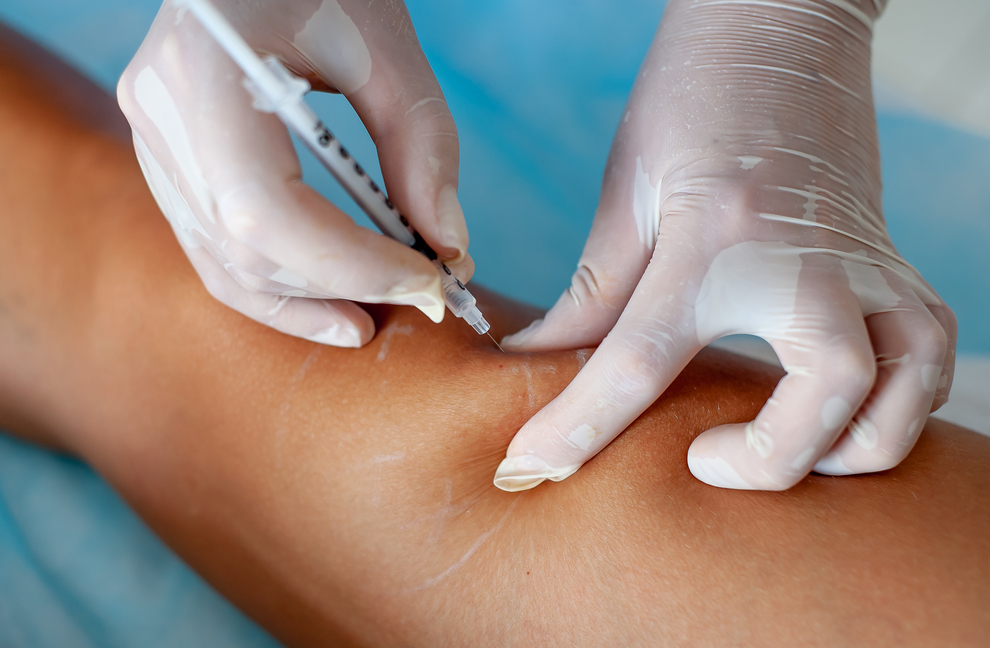
- Sterilization and local anesthesia: To reduce the risk of infection to zero, the area to be treated is made completely sterile with special solutions. Then, a local anesthetic (numbing) drug is applied to the area with a fine needle. Thanks to this numbing process, you will absolutely feel no pain or ache during the insertion of the catheter; you will only feel your physician’s slight touches in that area.
- Insertion of the catheter into the vein: Once complete numbness is achieved, a very thin guidewire is sent into the vein under ultrasound guidance. The soft-structured catheter is carefully slid over this guidewire and placed into the main vein at the targeted depth. The guidewire is then removed.
- Fixation and control: When the tip of the catheter reaches the correct and safe position, the external part remaining on the skin (the tube ends to be connected to the dialysis machine) is fixed to the skin with one or two small stitches to prevent it from moving. It is covered with a sterile, breathable but waterproof transparent tape. This entire process is successfully completed in a short time of an average of 15-20 minutes, and the catheter can be used immediately for dialysis.
Catheter Care and Things to Consider in Daily Life
Temporary dialysis catheters act as a door opening directly from the outside environment into your main bloodstream. Therefore, they are extremely sensitive to infections. It is of vital importance to pay attention to these golden rules to extend the patency period of your catheter and protect your physical health:
- Keep it dry and clean: The catheter insertion site must absolutely not come into contact with tap water. While showering, special waterproof protective tapes available at pharmacies that completely cover the catheter area should be used; in case of any moisture after the bath, the dressing must be renewed by expert hands.
- Avoid contact and pressure: You should not scratch the neck or collarbone area where the catheter is located, play with its tapes, or pull the dangling catheter tubes. Take care not to get your clothes caught on the tubes while dressing and undressing.
- It should only be used for dialysis: Blood must never be drawn from the catheter for routine blood tests, nor should any non-dialysis IV, antibiotic, or painkiller medication be administered. The use of those lines is solely within the expertise of your dialysis nurse.
- Regular and sterile dressing: The nurses at your dialysis center will meticulously care for your catheter before and after every session and will place special lock solutions (heparin) at the tips to prevent clotting. If you notice that your dressing is dirty, opened, or if you feel redness, pain, or heat in that area, you must contact your center without losing time.
Temporary Dialysis Catheter Doctors – Kartal – Istanbul
When an urgent need for dialysis arises, psychologically comforting the patient and performing the surgical procedure with a flawless medical vision directly affect the success of the treatment. Although catheter applications may seem like a standard procedure from the outside, since they involve working with large main vessels leading to the heart, they require a high-level knowledge of vascular anatomy, ultrasound experience, and surgical precision.
Cardiovascular surgery specialist Op. Dr. Nebiye Tüfekci, who stands out with the transparent, empathetic communication she has established with her patients throughout her professional career and her vast experience in vascular access, meticulously performs all temporary and permanent vascular access operations. Our priority is to provide our patients who need to undergo emergency dialysis with a fast, painless, and the safest access route, while simultaneously implementing the most accurate surgical planning for their permanent treatments (AV Fistula or Graft) that will secure their future life comfort.
We carry out all examinations, detailed ultrasound mapping, and diagnosis processes of our valued patients in our fully equipped clinic located within Bumerang Kartal Residence, which offers a modern, sterile, and peaceful environment. Located in one of the most advantageous and central locations of the Istanbul Anatolian Side in terms of transportation, our clinic provides great transportation convenience without traffic stress to our guests coming from neighboring districts such as Maltepe, Pendik, Tuzla, and Ataşehir, thanks to its direct connection to main transportation routes such as the E-5 highway, metro stations, and the coastal road, especially in the Kartal region.
To entrust your health to reliable hands without panicking during a sudden need for dialysis, to get detailed information about the painless temporary dialysis catheter insertion procedure under ultrasound guidance, and then to professionally plan your permanent vascular access, you can contact our clinic at Bumerang Kartal Residence. Trust the power of experience for healthy, uninterrupted, and comfortable dialysis sessions; let’s overcome challenging processes together, safely.